


- Home
- Insights
- Legal updates
- Uzbekistan adopts Constitutional Law on the International Digital Technologies Centre (Enterprise Uzbekistan)
August 21, 2026
Legal updates
Uzbekistan adopts Constitutional Law on the International Digital Technologies Centre (Enterprise Uzbekistan)
On 19 August 2026, the President of the Republic of Uzbekistan signed Constitutional Law No. UZQ-1169 “On the International Digital Technologies Centre” (Enterprise Uzbekistan) (the “Law”).
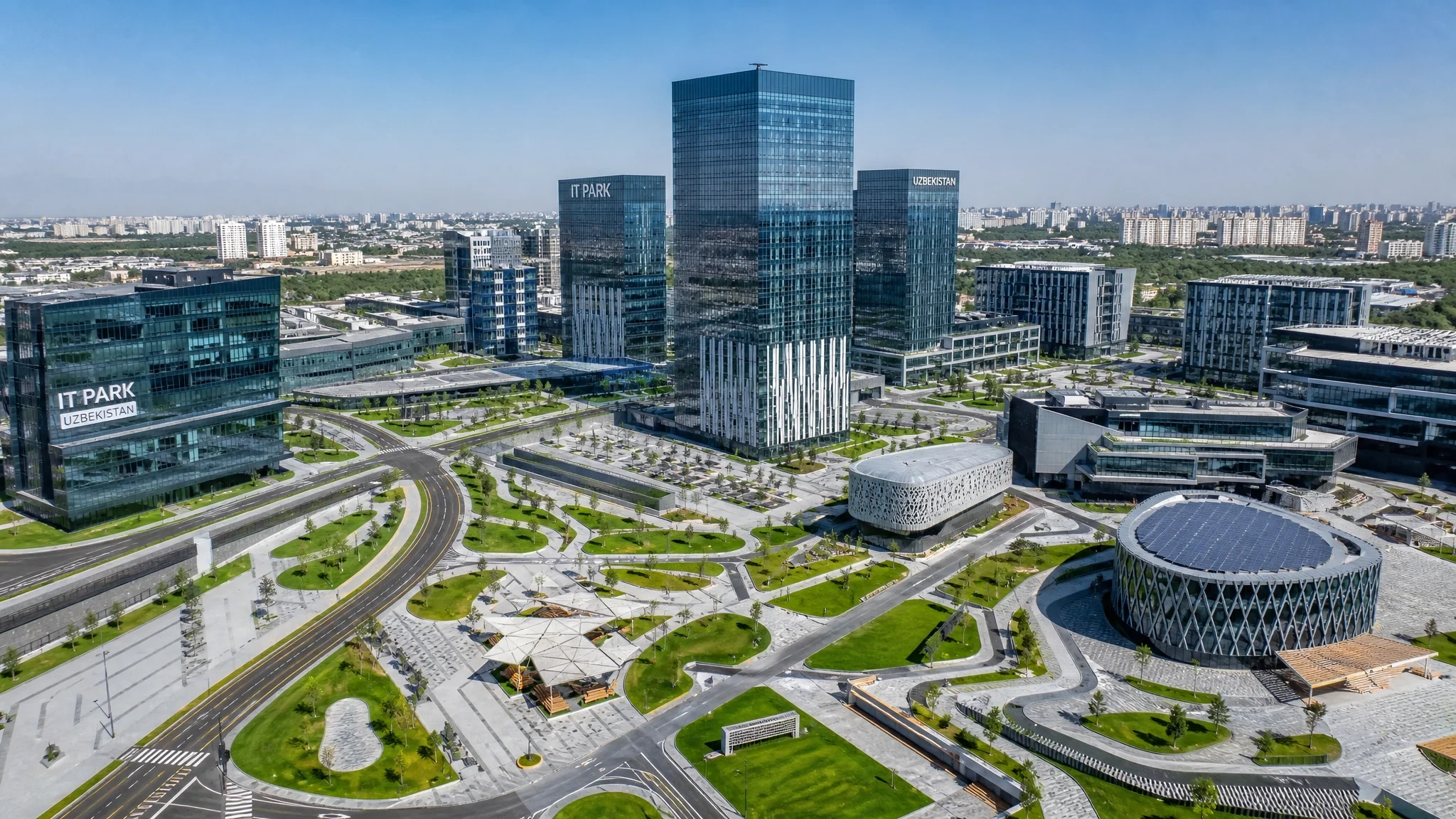
The Law establishes a special legal regime for the International Digital Technologies Centre (“Enterprise Uzbekistan” or the “Centre”), intended to support innovation, attract investment into digital technologies and promote the export of digital services.
The Law will enter into force on 21 January 2027 and provides that the special legal regime will remain in effect until 2100.
Scope of the special legal regime
The special legal regime may regulate, among other matters:
- the development, testing and implementation of innovative technologies, products and services;
- investment activities and the export of digital services;
- regulatory sandbox projects;
- civil, corporate and commercial matters;
- taxation and customs matters;
- labour and employment;
- financial, banking and currency operations;
- personal data protection and cloud technologies;
- intellectual property protection; and
- the provision of state and other services.
The Centre’s territory will be determined by the President of the Republic of Uzbekistan. The regime may also apply to certain projects implemented outside the Centre’s principal territory where the relevant area is designated as a production territory in accordance with the Law.
Applicable law and Centre decisions
Within the Centre, the applicable legal framework will include:
- the Constitution of the Republic of Uzbekistan;
- the Law;
- decrees and resolutions of the President of the Republic of Uzbekistan concerning the Centre;
- decisions of the Centre adopted within its jurisdiction;
- where necessary and provided that they do not contradict the Constitution, the Law or decisions of the Centre, the common law of England and Wales and the principles of equity; and
- Uzbek legislation to the extent that it is not regulated by, and does not contradict, the Law or decisions of the Centre.
Decisions adopted by the Centre within its jurisdiction will prevail over conflicting Uzbek normative legal acts, except for the Constitution, the Law and Uzbekistan’s ratified international treaties.
The Centre’s official working language will be English. Decisions of the Centre must be published in English, and the English text will prevail in the event of inconsistencies between language versions.
Governance
The Centre’s governing bodies will consist of:
- the Management Council, which will determine the Centre’s strategic directions and exercise overall governance; and
- the Administration, which will act as the executive body and working body of the Management Council.
The President of the Republic of Uzbekistan will chair the Management Council. The Council will have broad authority to adopt decisions governing the special legal regime, including rules relating to Centre participants, investment, regulatory sandbox projects, tax and customs matters, labour, licensing and other activities within the Centre.
Centre participants and investors
Participants of the Centre will include its residents and investors. Legal entities carrying out activities approved by the Management Council may obtain resident status.
The Law identifies four investor categories:
- institutional investors;
- startup investors;
- resident-investors; and
- infrastructure investors.
The Centre’s decisions may establish separate eligibility requirements, operating conditions and support measures for each category.
Investors and Centre participants will have the right to independently determine the amount, form and direction of their investments and to freely dispose of income generated from investment activities, subject to the Law and the Centre’s decisions.
The Law also establishes protections against confiscation, nationalisation, expropriation, seizure and other restrictions on the disposal of assets, investments and property of Centre subjects, subject to specified exceptions, including final and binding decisions of the Tashkent International Commercial Court, anti-money laundering and counter-terrorist financing requirements, sanctions-related restrictions and criminal-proceeds matters.
Regulatory sandbox
The Law introduces a regulatory sandbox for the creation, testing and implementation of innovative technologies, products and services.
The Management Council will determine the procedure for the sandbox, including project-selection criteria, applicable temporary exemptions or simplified requirements, monitoring procedures, participant obligations and liability. Unless a different period is established by the Management Council, a sandbox project may operate for up to 12 months.
Possible preferences within the sandbox may include:
- temporary exemption from certain legislative or regulatory requirements;
- temporary exemption from licensing and permit procedures;
- access to the Centre’s infrastructure, including laboratories and expert support; and
- the possibility to test innovative products and services in real market conditions within controlled parameters.
Testing an innovative technology, product or service in the sandbox will not itself constitute grounds for liability, except where harm is caused to an individual’s life or health.
Tax regime
The Law establishes a separate tax regime for Centre bodies, participants and their employees.
Except for value-added tax, corporate income tax and personal income tax regulated under the Law, Centre bodies, participants and employees will be exempt from taxes and charges imposed under Uzbek tax legislation in respect of income received within the special legal regime.
Key provisions include the following:
- income derived by Centre participants from priority activities within the Centre’s territory will be exempt from corporate income tax;
- supplies of goods and services within the Centre’s territory, as well as exports from Uzbekistan, will be subject to VAT at a zero rate;
- foreign highly qualified employees of Centre bodies and participants will be exempt from personal income tax on remuneration and dividend income paid by the Centre;
- remuneration paid to other foreign employees will generally be subject to personal income tax at 12%;
- remuneration paid to Uzbek citizens and stateless persons employed by Centre bodies or participants will generally be subject to personal income tax at 7.5%; and
- investors that do not hold Centre participant status will be exempt from personal income tax or corporate income tax, as applicable, on dividends and other income derived from investment activities carried out under the special legal regime.
The specific application and administration of the tax regime will be further regulated by decisions of the Centre.
Customs incentives
The Law provides for customs and VAT exemptions for certain equipment, component parts, software, materials and samples imported for:
- the development and production of digital technology products;
- use within the regulatory sandbox;
- the activities of the Centre’s bodies; and
- investment projects.
The list of goods eligible for customs-duty exemptions will be approved by the Management Council.
The Law also introduces simplified customs procedures. Customs declarations may be submitted electronically through the Centre’s digital platform and must be reviewed by customs authorities within no more than two business days.
Data, cloud technologies and intellectual property
The Law permits the Centre to establish special rules for the processing and protection of personal data in accordance with international standards.
The Law also specifically addresses cloud technologies. Information may be stored and processed using cloud technologies, subject to requirements designed to ensure data security, integrity, protection, reliability and the ability to process and use information.
The protection of intellectual property rights is guaranteed within the Centre. The Centre may introduce additional mechanisms to encourage the creation, protection and commercialisation of intellectual-property assets, including rules on the allocation of rights to works created in the course of employment or services.
Financial services
Accredited partners may provide Centre participants with a range of financial and banking services, including:
- banking services;
- investment and venture-investment services;
- securities-market services;
- insurance and reinsurance;
- financial-technology and payment services; and
- other financial services not prohibited by law.
Subject to agreement with the Central Bank of Uzbekistan, branches of foreign banks may also be established within the Centre.
Artificial intelligence and education
The Law separately supports freedom to conduct activities and research relating to the creation, testing and implementation of artificial intelligence technologies.
In developing and testing AI solutions, restrictions may not be imposed unless necessary to protect the rights and lawful interests of individuals and legal entities, prevent threats to public safety and public order, or ensure Uzbekistan’s compliance with its international obligations.
The Law also establishes a special regime for education within the Centre. Educational institutions may operate under programs and standards of leading foreign educational institutions, subject to safeguards relating to state sovereignty, territorial integrity, security, constitutional rights, public health and public morality.
Dispute resolution
Disputes arising under the Centre’s special legal regime will be considered by the Tashkent International Commercial Court in accordance with the constitutional law governing that court.
The Court will have jurisdiction over, among other matters:
- civil, commercial, corporate and labour disputes between Centre subjects;
- disputes concerning activities conducted under the Centre’s special regime;
- disputes relating to property located within the Centre;
- insolvency, restructuring, reorganisation and bankruptcy matters involving Centre participants;
- disputes arising from decisions, acts or omissions of the Centre’s bodies; and
- international arbitration-related matters within the Court’s jurisdiction.


